
Introduction
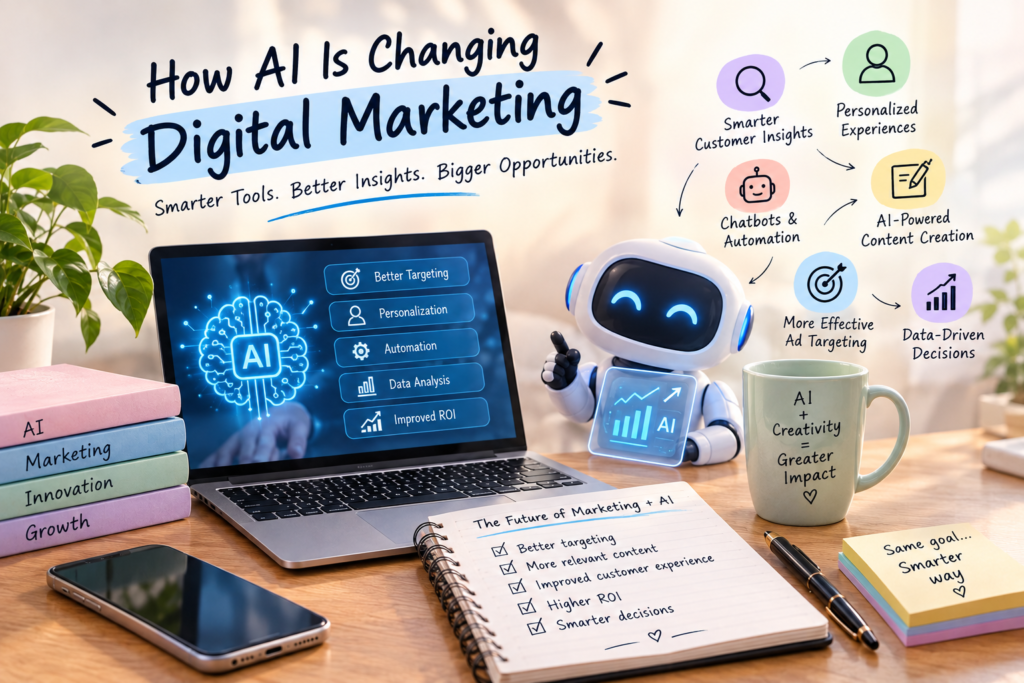
Artificial Intelligence (AI) is no longer a technology of the distant future; it has become an integral part of our everyday live. It has become an important part of everyday business, and digital marketing is one of the industries experiencing its biggest transformation. From creating content and analyzing customer behavior to personalizing advertisements and automating repetitive tasks, AI is changing the way businesses connect with their audiences.
Digital marketing has always been driven by a combination of data, creativity, and technology. AI brings these three elements together by allowing marketers to process huge amounts of information and make faster, more informed decisions. As AI technology continues to develop, businesses of all sizes are finding new ways to use it to improve their marketing strategies.
In this blog, we will explore how AI is changing digital marketing, its major applications, benefits, challenges, and what the future may look like.
What Is AI and How AI Is Changing Digital Marketing?
Artificial Intelligence (AI) is a technology that allows computers to perform tasks that normally require human intelligence. These tasks include learning from information, recognizing patterns, understanding language, making predictions, and generating content.
rewrite In digital marketing, AI can analyze customer data, identify trends, predict customer behavior, automate communication, and assist marketers in creating campaigns.AI tools help marketers understand what customers need and offer them more useful and relevant experiences .For example, when an online shopping website recommends products based on what you previously viewed or purchased, AI may be working behind the scenes. Similarly, when a chatbot answers a customer’s question instantly, AI can be responsible for that interaction.
1. AI Is Transforming Content Creation
Effective content is a major part of any digital marketing strategy. Businesses constantly need blog posts, social media captions, advertisements, emails, product descriptions, videos, and other forms of content.
AI tools can help marketers generate ideas, create drafts, summarize information, develop headlines, and adapt content for different platforms. This can save significant time when handling repetitive content-related work.
However, AI should complement rather than replace human creativity. High-quality marketing content still requires human judgment, originality, emotional understanding, fact-checking, and knowledge of the brand’s audience.
The most effective approach is often to use AI as an assistant while allowing marketers to provide the strategy, creativity, and final judgment.
Content creation is one of the clearest examples of How AI Is Changing Digital Marketing, particularly in the way marketers plan, create, and distribute content.
2. Personalized Customer Experiences
Customers increasingly value personalized experiences that align with their interests and preferences. Sending the same message to every customer may not produce the best results.
AI allows businesses to provide personalized experiences to a broader audience. It can analyze information such as browsing behavior, previous purchases, interests, and interactions to help marketers deliver more relevant content.
For example, an e-commerce company may show different product recommendations to different visitors based on their previous activity. An email campaign can also be personalized according to a customer’s interests or purchasing history.
By personalizing their messages, businesses can make communication more relevant and useful to their customers.
Personalization demonstrates How AI Is Changing Digital Marketing by helping marketers use customer information to create more relevant communication.
AI-powered personalization is another important example of How AI Is Changing Digital Marketing, particularly when businesses need to communicate with large and diverse audiences.
3. Smarter Advertising
Digital advertising involves many decisions, including which audience to target, when to show an advertisement, how much to spend, and which creative version to use.
AI can process vast amounts of advertising data and uncover patterns that may be difficult for humans to identify manually. These insights can help marketers improve audience targeting, optimize campaigns, and allocate their budgets more effectively.
AI-powered advertising systems can also help identify which types of users are more likely to interact with an advertisement or complete a desired action.
As a result, businesses can make more informed advertising decisions and improve the overall efficiency of their campaigns.
Smarter advertising is another important example of How AI Is Changing Digital Marketing by helping marketers analyze campaign data and make informed decisions.
The use of automated targeting and campaign analysis further shows How AI Is Changing Digital Marketing by giving marketers additional tools for managing advertising activities.
4. Better Customer Service Through Chatbots
AI-powered chatbots have become an important part of modern digital marketing.
Traditional customer service often requires employees to respond manually to every question. AI-powered chatbots can handle many common questions instantly, such as questions about products, services, order status, opening hours, or basic policies.
This provides customers with quick access to information, even outside normal business hours.
Chatbots do not necessarily replace human customer-service teams. Instead, they can handle simple and repetitive questions while human employees focus on more complicated situations that require empathy, judgment, or personal attention.
Customer service is an important part of How AI Is Changing Digital Marketing, especially as businesses use AI-powered tools to provide faster communication.
AI chatbots also demonstrate How AI Is Changing Digital Marketing by helping businesses respond to common customer questions while allowing employees to focus on more complex interactions
5. AI-Powered SEO
Search Engine Optimization (SEO) is essential for businesses that want their websites to appear in search results.
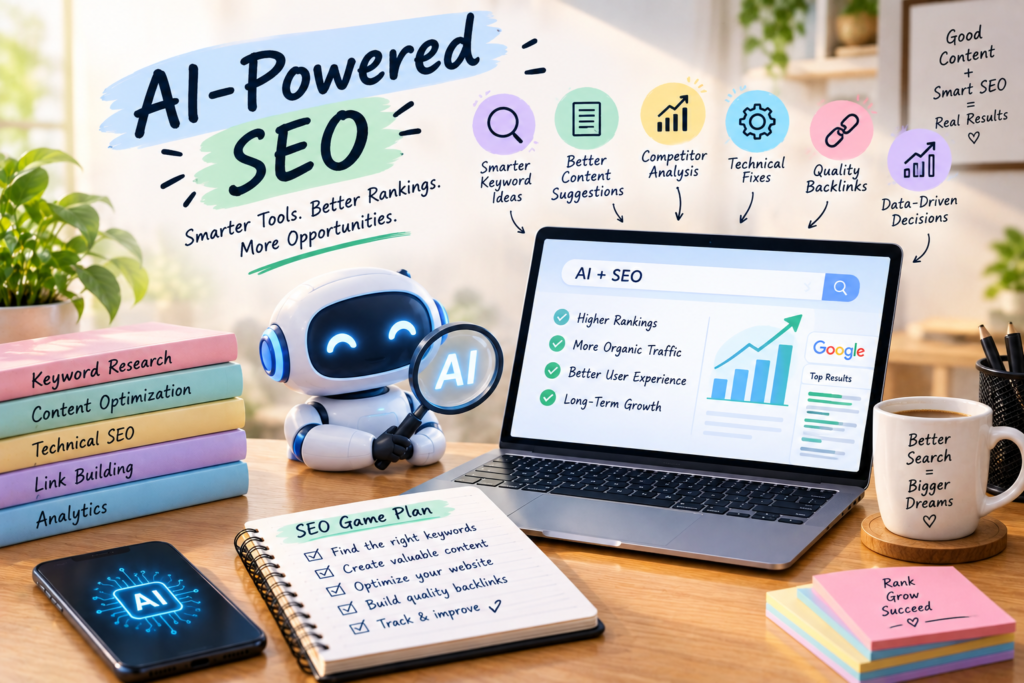
AI is changing SEO by helping marketers identify search topics, understand user intent, discover content ideas, and analyze large amounts of search data. It can also assist with keyword research, content organization, competitor analysis, and technical SEO tasks.
AI and machine learning also help search engines understand online content and determine which information may be relevant to users.
Because of this, marketers should focus not only on inserting keywords into content but also on creating useful, trustworthy, well-structured information that genuinely answers users’ questions.
AI-powered SEO shows How AI Is Changing Digital Marketing by helping marketers understand search behavior and improve the usefulness of their content.
Understanding search intent is another way to see How AI Is Changing Digital Marketing, as marketers increasingly need to create content that satisfies users rather than simply targeting individual keywords.
6. Predictive Analytics and Customer Behavior
One of the key strengths of AI is its ability to analyze data and recognize meaningful patterns.
AI can process large amounts of customer information and help marketers identify trends and predict possible customer behavior.
For example, businesses can use predictive analytics to identify customers who may be interested in purchasing a product, becoming less engaged with a brand, or responding positively to a particular campaign.
These insights can help marketers make better decisions, plan campaigns more effectively, and understand their customers more deeply.
Predictive analytics helps explain How AI Is Changing Digital Marketing by giving marketers additional tools for understanding patterns in customer data.
The growing use of predictive analytics shows How AI Is Changing Digital Marketing by helping businesses use historical and current data to support marketing decisions.
7. Social Media Marketing
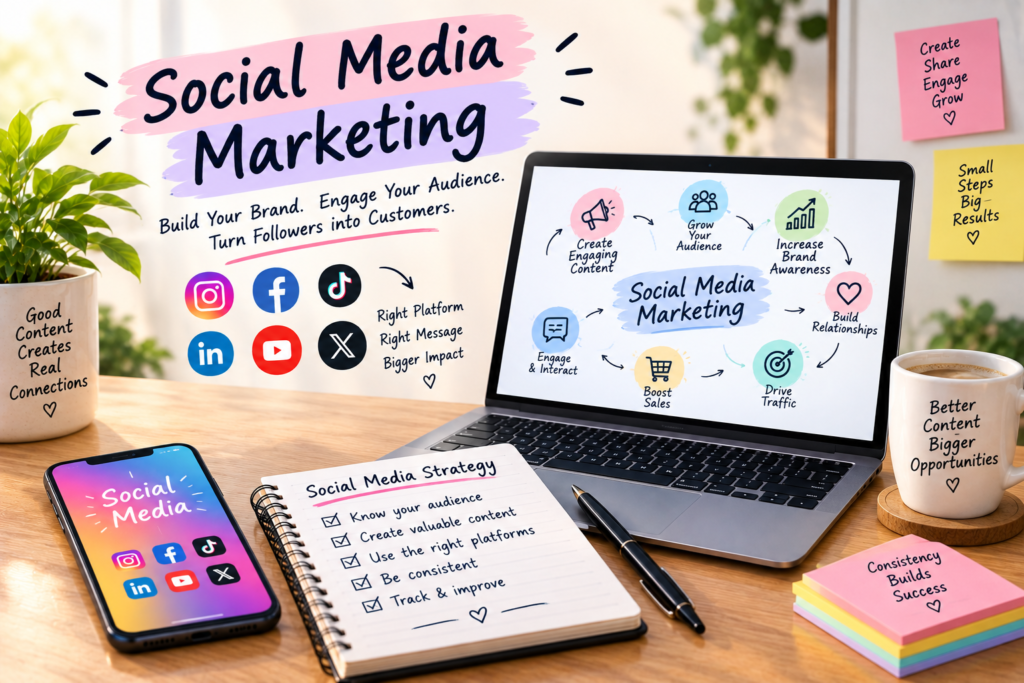
Social media produces vast amounts of data every day, and AI can help marketers manage and analyze this information efficiently.
AI tools can assist with:
-
Content ideas
-
Post scheduling
-
Audience analysis
-
Sentiment analysis
-
Trend identification
-
Performance reporting
-
Content optimization
These capabilities can help marketers understand how people respond to their content.
For example, sentiment analysis can help companies determine whether online discussions about their brand are generally positive, negative, or neutral.
AI can also help marketers identify engagement patterns and understand which types of posts are generating stronger responses.
Social media provides another practical example of How AI Is Changing Digital Marketing through automated analysis, content assistance, and audience insights.
AI-assisted social media analysis provides another perspective on How AI Is Changing Digital Marketing, especially when marketers need to understand audience behavior across large volumes of conversations.
8. Voice Search and Conversational Marketing
The way people search for information is changing. Instead of always typing short keywords into a search engine, users increasingly interact with digital assistants and conversational interfaces using natural language.
AI-powered language technologies allow systems to understand questions and respond in a more conversational way.
This creates new opportunities for marketers. Businesses need to consider how customers naturally ask questions and create content that provides clear, direct answers.
Conversational marketing can also help businesses communicate with customers through chat interfaces, messaging platforms, and AI-powered assistants.
Voice search and conversational tools further demonstrate How AI Is Changing Digital Marketing by changing the way customers interact with brands and search for information.
9. Automation Saves Time
Digital marketing involves many repetitive tasks. These can include sending emails, organizing leads, generating reports, scheduling social media posts, segmenting audiences, and monitoring campaigns.
AI and automation can reduce the amount of manual work involved in these activities.
For example, a business can create an automated email sequence for new subscribers. AI can help determine what type of content may be relevant to different audience segments, while automation handles the timing and delivery.
This allows marketers to spend more time on strategy, creativity, and customer relationships.
10. Improved Data Analysis
Modern marketing produces huge amounts of data. Website visits, clicks, impressions, conversions, engagement, purchases, and customer interactions all provide valuable information.
Transforming data into insights.
AI can analyze large datasets quickly and identify relationships and patterns. Instead of simply looking at numbers, marketers can use AI-assisted analysis to understand what may be contributing to campaign performance.
For example, marketers can compare different campaigns and identify which audiences, messages, or channels are generating better results.
Benefits of AI in Digital Marketing
The growing use of AI provides several benefits for businesses and marketers:
Increased efficiency: AI can automate repetitive tasks and reduce manual workloads.
Better personalization: Businesses can provide more relevant experiences to individual customers.
Faster decision-making: AI can process large amounts of data quickly.
Improved customer experience: Chatbots and personalized communication can make interactions faster and more convenient.
Cost optimization: Automation and better targeting can help businesses use marketing resources more efficiently.
Scalability: AI allows businesses to manage large audiences and large amounts of data without increasing manual work at the same rate.
Challenges of Using AI in Marketing
Although AI provides many advantages, it also comes with challenges.
One major concern is accuracy. AI-generated information can sometimes be incorrect or misleading, so human review remains important.
Privacy is another important issue. Businesses need to handle customer data responsibly and follow applicable privacy and data-protection requirements.
There is also the risk of producing generic content. If businesses rely too heavily on AI without adding human creativity and brand personality, their content may feel repetitive.
Finally, marketers need to consider ethical issues such as transparency, bias, responsible data use, and appropriate disclosure when using AI-generated content.
The Future of AI in Digital Marketing
AI is likely to become even more deeply integrated into digital marketing. Future marketing systems may become better at understanding customer intent, predicting behavior, creating personalized experiences, and automating campaign management.
However, the future of marketing is unlikely to be simply “AI versus humans.” Instead, successful marketers will probably combine AI’s ability to process information and automate tasks with human creativity, strategic thinking, empathy, and communication skills.
The marketers who learn how to work effectively with AI may have a significant advantage. Rather than fearing the technology, businesses can learn how to use it responsibly and strategically.
Conclusion
Artificial Intelligence is changing digital marketing from content creation and SEO to advertising, customer service, personalization, analytics, and automation. It enables businesses to process information faster, understand customers better, and create more efficient marketing campaigns.
At the same time, AI is not a magic solution. Successful digital marketing still depends on understanding people, creating valuable content, building trust, and developing strong strategies. AI can support these efforts, but human judgment remains essential.
The future of digital marketing will likely belong to businesses and marketers that find the right balance between technology and human creativity. By using AI responsibly and combining it with genuine human insight, businesses can create marketing experiences that are not only more efficient but also more relevant and valuable to their customers.